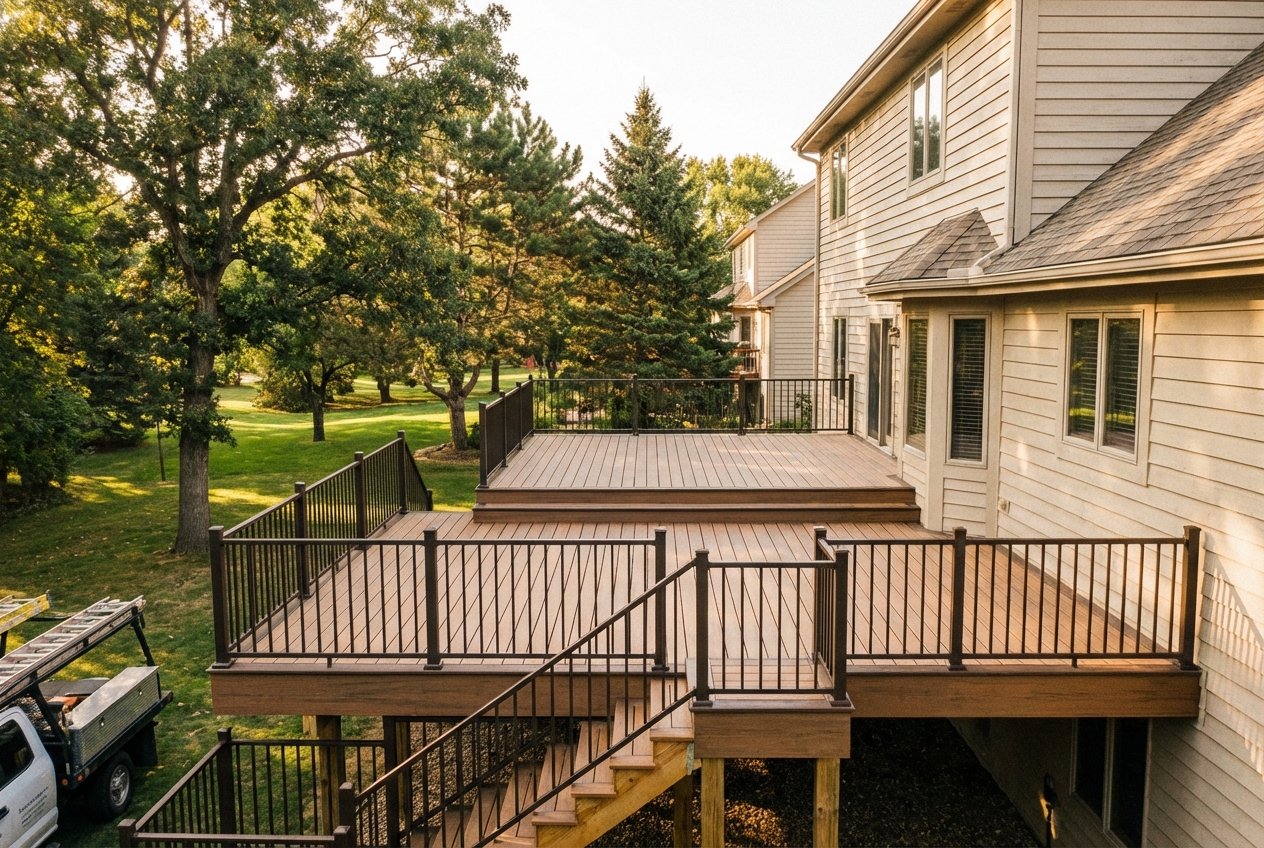
Full deck design and construction — composite, hardwood, and pressure-treated.
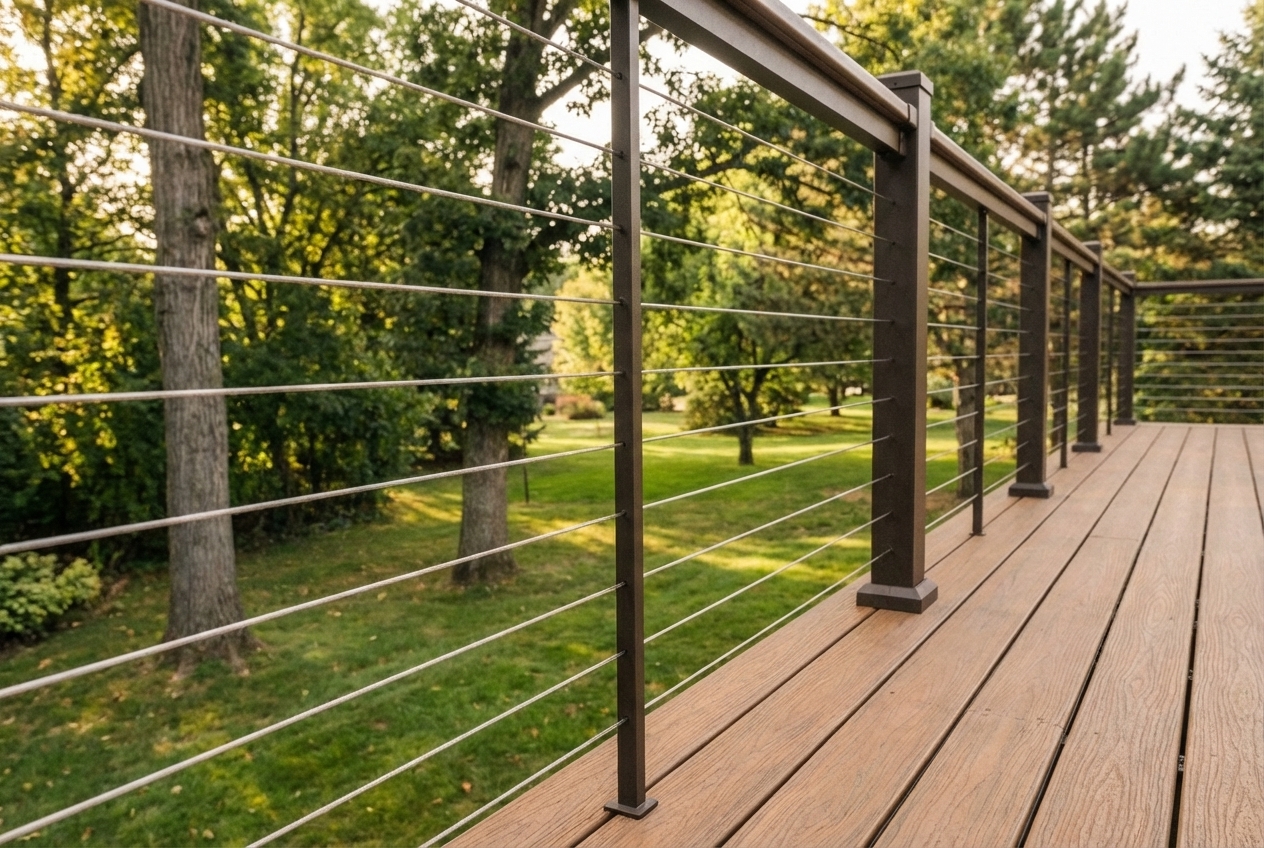
From sleek cable systems to classic wood balusters, we install code-compliant deck railings. Safety, style, and zero shortcuts.
Get a Free EstimateRailings are often an afterthought — until they're wobbly, rotting, or blocking the view you built the deck for. Whether you're replacing old railings that have seen better days or choosing a system for a new build, the material and style you pick changes how the whole deck looks and feels.
Cable systems keep sightlines open on wooded or elevated lots. Composite railings match your deck boards for a seamless look with zero maintenance. Wood gives you full control over stain color and style. Aluminum is lightweight and corrosion-proof. The materials comparison below covers the real tradeoffs — cost, upkeep, and where each one makes the most sense.
Georgia code requires railings on any deck 30 inches or more above grade, with specific rules on height and baluster spacing. We build to code and handle the inspection, so nothing gets flagged after the fact.
County inspectors enforce these — a failed inspection means rework on your dime.
Railings are required on any deck 30 inches or more above grade. Lower decks can skip them — common on flat lots.
Measured from deck surface to cap rail top. Applies to all open sides including stairs. Stair railings must be graspable — your hand needs to wrap around the top rail.
Close enough that a child can't squeeze through. Applies to all infill — balusters, cables, glass panels. We template every installation and tension cables to spec before inspection.
Each railing type has trade-offs. Here's an honest breakdown so you can pick the right one for your deck, your budget, and your view.
Cable railing uses thin stainless steel cables stretched horizontally between posts, creating a modern look that preserves your sightlines. It's the most popular choice for homeowners with wooded lots, pool views, or elevated decks where you don't want a wall of balusters blocking the scenery.
Homeowners who want a modern look with clear views — especially on elevated or wooded lots
$60 – $120 per linear ft (installed)
Composite railings from brands like Trex Transcend, TimberTech, and Fiberon are designed to match composite decking boards for a seamless, unified appearance. They resist moisture, insects, and UV damage — three things Georgia's climate delivers in spades — and never need staining or sealing.
Homeowners with composite decks who want a low-maintenance, matched look
$40 – $90 per linear ft (installed)
Pressure-treated wood railings remain the most affordable option and give you total customization — any stain color, any baluster style, any post cap. Aluminum railings offer a thin, powder-coated profile that won't rust and lasts decades with zero maintenance. We install both.
Budget-conscious projects (wood) or low-maintenance simplicity (aluminum)
$25 – $65 per linear ft (installed)
Cable railing uses thin stainless steel cables stretched horizontally between posts, creating a modern look that preserves your sightlines. It's the most popular choice for homeowners with wooded lots, pool views, or elevated decks where you don't want a wall of balusters blocking the scenery.
Homeowners who want a modern look with clear views — especially on elevated or wooded lots
$60 – $120 per linear ft (installed)
From first call to final walkthrough, we make the process simple and stress-free.
We inspect your deck structure, check post locations and rim joist condition, and help you choose between cable, composite, aluminum, or wood systems.
We measure every run, mark post locations, and confirm the layout accounts for stairs, gates, and corner transitions.
Railing posts are bolted or lag-screwed into the rim joist or deck frame with proper blocking for a rock-solid foundation.
Top rails, bottom rails, balusters or cables installed and secured. Cable systems get individually tensioned to spec.
We verify code compliance — height, spacing, structural integrity — schedule the county inspection, and clean up. Ready to use.
"Peachy Decks completely transformed our backyard. The composite deck they built is stunning and the craftsmanship is top-notch. They handled everything from permits to final cleanup."
Sarah M.
Marietta, GA
"We got quotes from four companies. Peachy Decks was the most transparent with pricing and the only one who showed up on time for the consultation. The finished pergola exceeded our expectations."
James & Linda R.
Roswell, GA
"Our screened porch is now our favorite room in the house. The team was professional, clean, and finished ahead of schedule. Highly recommend for anyone in the Atlanta area."
David K.
Alpharetta, GA
Full deck design and construction — composite, hardwood, and pressure-treated.
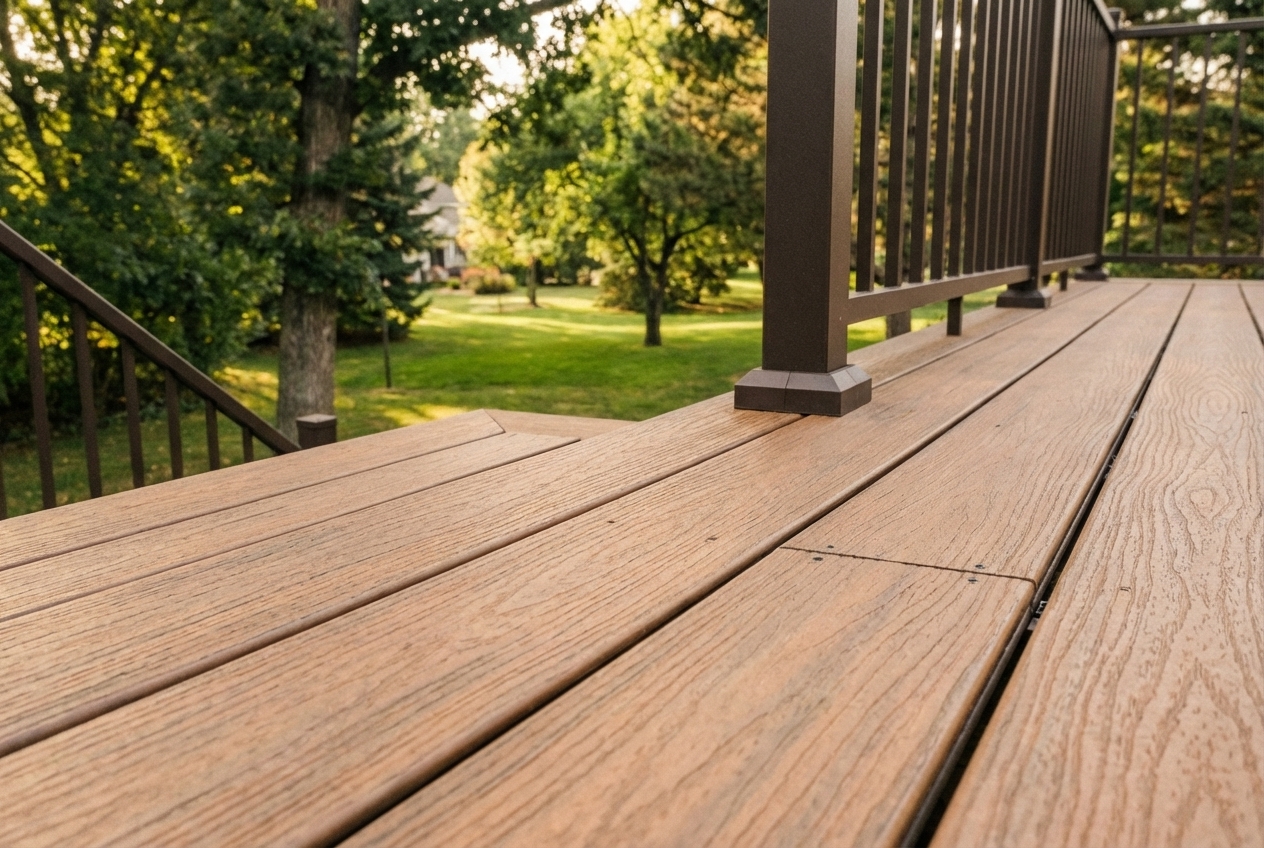
Trex, TimberTech, and AZEK decking with matching railing options.
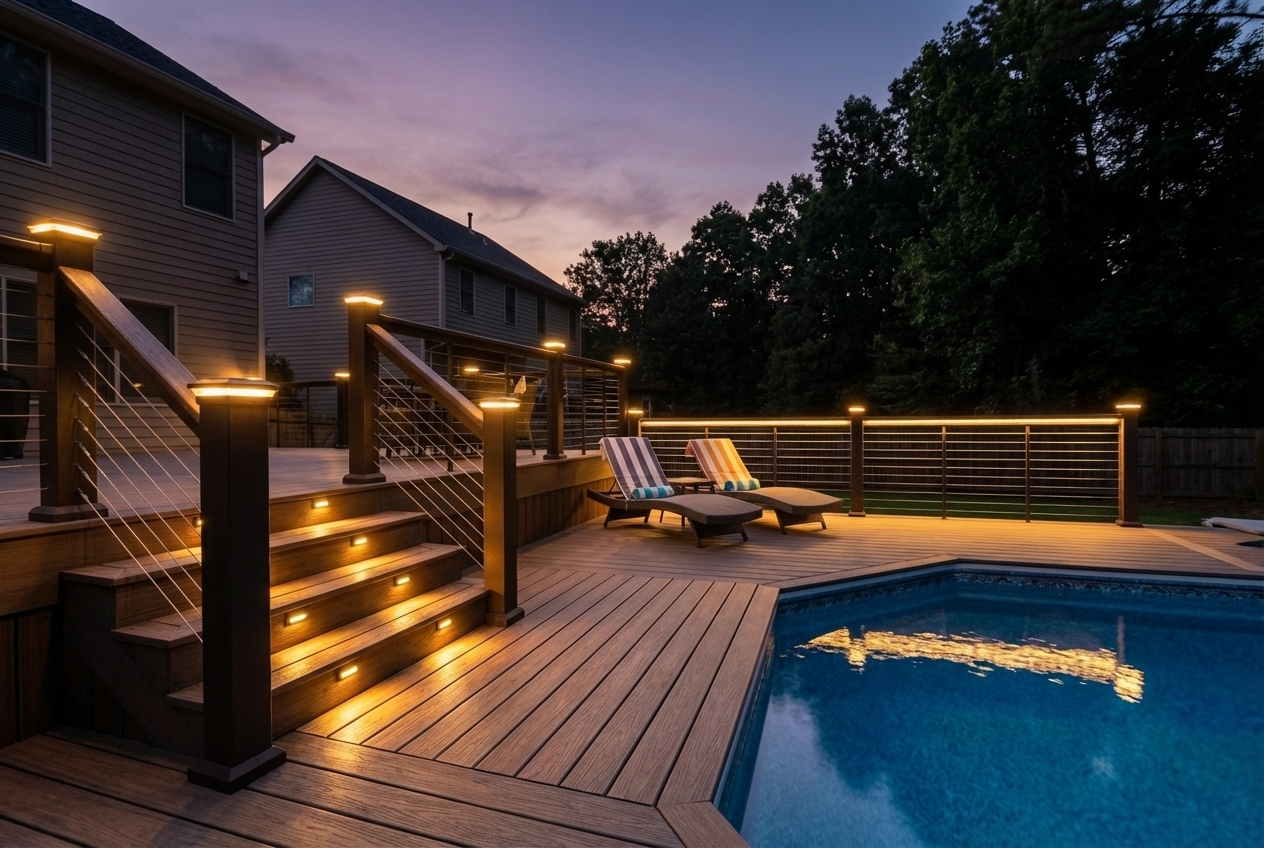
LED post cap lights, stair lights, and ambient lighting to complement your railings.
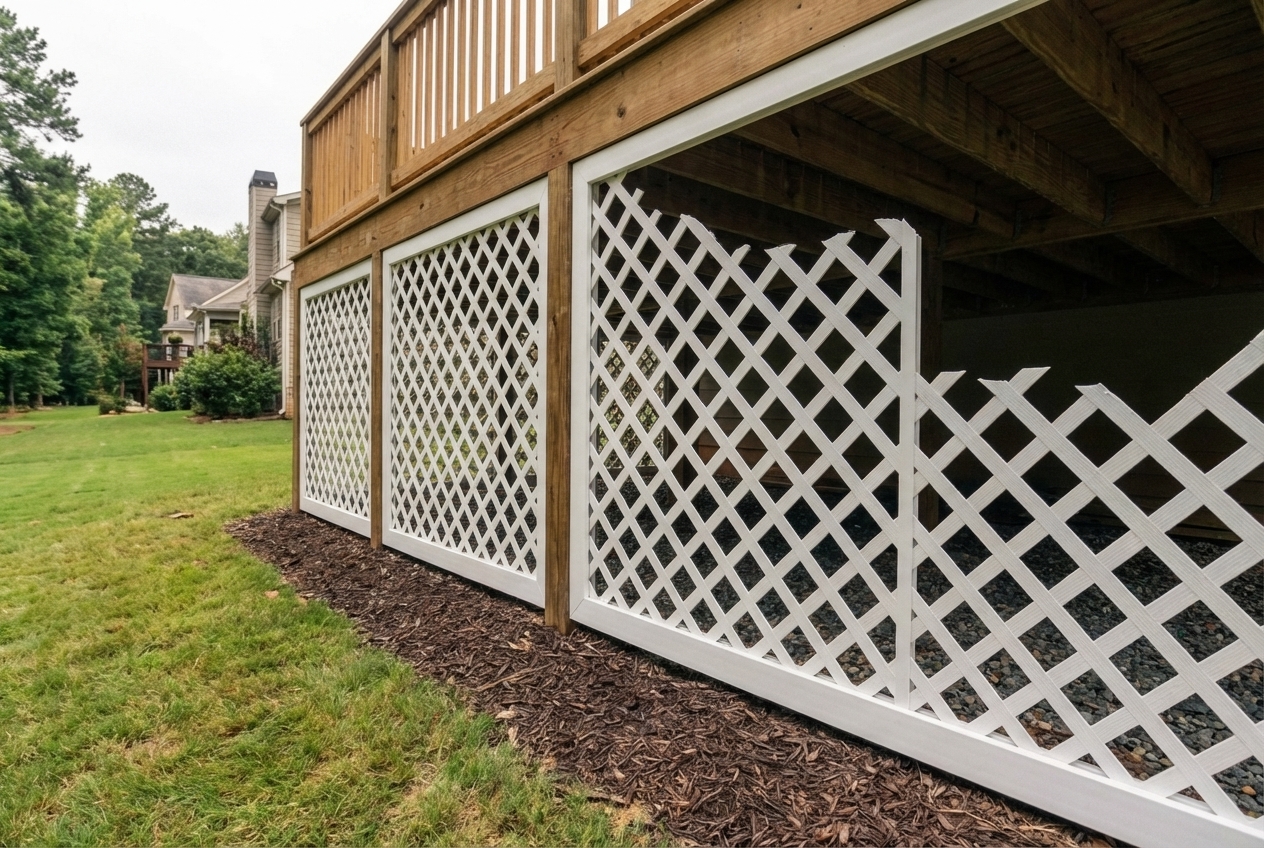
Lattice, board, and stone veneer skirting to finish the look under your deck.
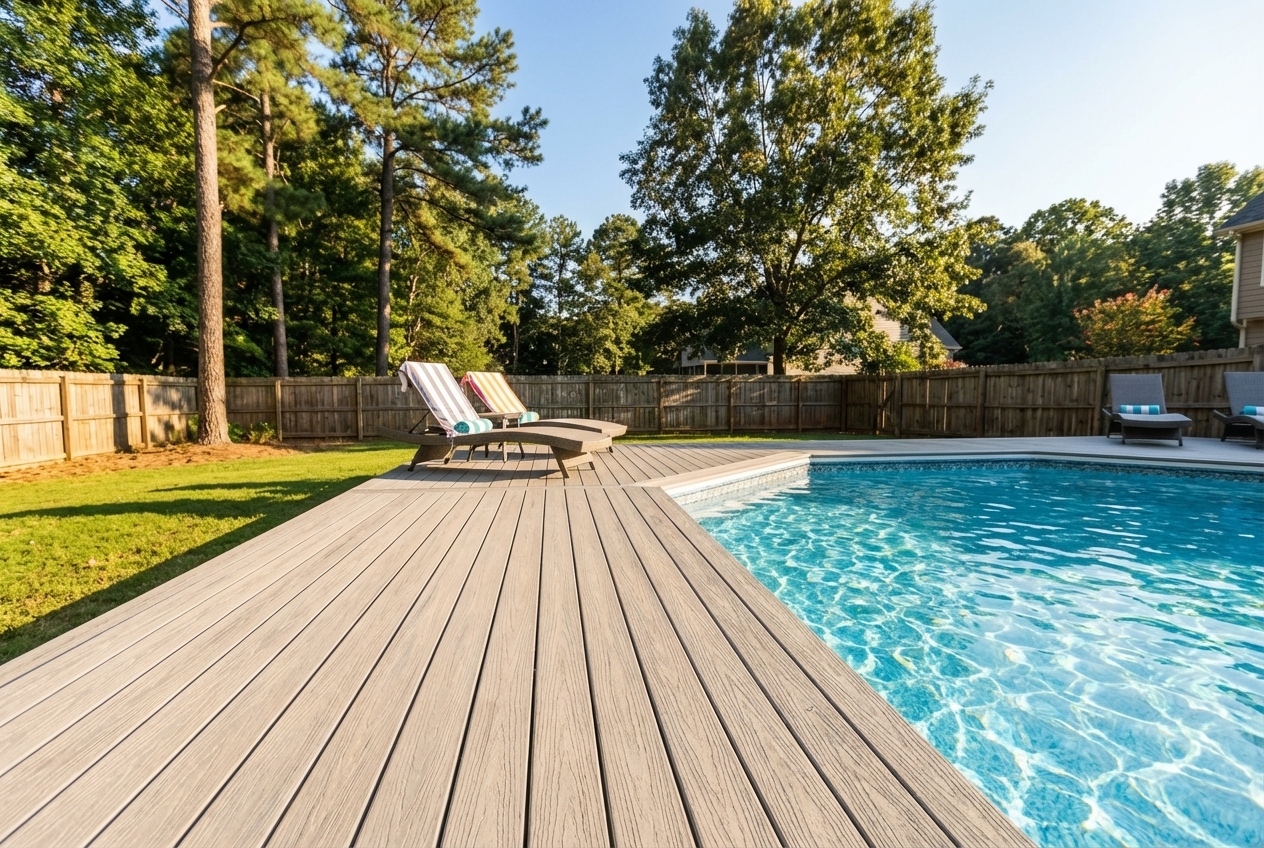
Custom pool surrounds with code-compliant railings and gates.
Common questions about deck railing installation. Need more info? Call us — we're happy to talk through your project.
Get a Free EstimateYes — Georgia building code requires railings on any deck surface 30 inches or more above the ground. The railing must be at least 36 inches tall, and balusters can't be spaced more than 4 inches apart. We make sure every railing we install is fully code-compliant.
Costs range from about $25 per linear foot for pressure-treated wood up to $120+ per linear foot for stainless steel cable systems. A typical 40-foot run costs $1,000-$4,800 depending on materials. Composite railings fall in the middle at $40-$90 per linear foot installed.
Composite and aluminum railings perform best in hot, humid climates because they don't rot, warp, or need annual maintenance. Cable railings (stainless steel) are also excellent — they won't rust or corrode. Wood railings are the most affordable but need staining or sealing every 2-3 years to prevent moisture damage and UV fading.
Absolutely. We replace old, wobbly, or rotting railings on existing decks all the time. As long as the deck framing and posts are structurally sound, we can remove the old railing system and install new cable, composite, aluminum, or wood railings without touching the deck surface. We inspect the substructure first to make sure everything is solid.
Most railing installations take 1-3 days depending on the size of the deck and the railing system. A straightforward composite or wood railing on a standard-sized deck is usually a one-day job. Cable railing systems take a bit longer because each cable needs to be individually tensioned. We give you a timeline before any work starts.
Get your free, no-obligation estimate today. We'll visit your home, discuss your vision, and provide a detailed quote — all at no cost.